
Play on words puns are the ultimate linguistic gymnastics that twist meaning and bend language to its breaking point. Whether you're a seasoned wordsmith or just discovering the joy of double meanings, this collection celebrates the art of clever linguistic flip-flops. Get ready to groan, giggle, and maybe even steal a few of these gems for your next conversation. Your friends won't know what hit them! For more laughs, see our cat puns, dog puns, bacon puns.
Classic One-Liners That Flip the Script
These timeless treasures prove that playing with words never gets old.

- I'm reading a book on the history of glue—can't put it down, literally.
- The grammar teacher got sent to jail for running an incorrect sentence.
- I tried to write a book about nothing, but it was pointless.
- A synonym for 'thesaurus' is 'dictionary'—now that's a word to live by.
- The alphabet went to therapy because it had too many issues to sort through.
- I told my computer I needed a break—it said 'Ctrl+Alt+Delete your plans.'
- Punctuation marks filed for divorce because they couldn't agree on periods.
- The letter E got promoted for standing out in the crowd.

- I asked the word processor about its feelings—it said it was getting text-hual.
- Vowels formed a band because they wanted to make some noise about their sound.
- The dictionary fell in love with the encyclopedia; it was a well-defined romance.
- I lost my job at the word factory for making inappropriate linguistic choices.
- The sentence went to prison for being too long and complex.
- Metaphors are like anchors—they keep you grounded in meaning.
- The pun artist finally got recognition; their work was un-be-leaf-able.
- I entered a wordplay competition and won by a syllable.
- The homophones opened a restaurant because they wanted to serve similar-sounding cuisine.
Q&A Jokes That Double Down on Meaning
Questions with answers that take the linguistic long way around.

- Q: Why did the metaphor go to school? A: It wanted to get a figure of speech.
- Q: What do you call a pun that's also a lie? A: A false pretense-ntence.
- Q: How do writers stay cool? A: They use their literary breeze.
- Q: Why did the word go to the gym? A: It wanted to strengthen its vocabulary.
- Q: What happened when the adjective met the noun? A: They had a meaningful encounter.
- Q: Why do palindromes make terrible secrets? A: They always read the same forwards and backwards.
- Q: How do syllables throw parties? A: They break it down into smaller celebrations.
- Q: What's a homonym's favorite game? A: Sounding the same but winning differently.

- Q: Why did the verb refuse to sit down? A: It needed to stay active in the sentence.
- Q: How do oxymorons stay married? A: By embracing their contradictions.
- Q: What did the comma say to the period? A: 'You always get the final word.'
- Q: Why are alliterations always angry? A: Because they can't stop repeating themselves.
- Q: What's a pun's biggest fear? A: Being misunderstood on multiple levels.
- Q: How do antonyms stay friends? A: They agree to disagree.
- Q: Why did the simile never win awards? A: It was always compared to the metaphor.
- Q: What do you call a language that plays tricks? A: Deceit-ful English.
- Q: Why do puns get invited to every party? A: Because they're always on point, twice.
Instagram Caption Puns for Your Feed
Captions that make followers double-tap the wordplay.

- Feeling like a paragraph today—I've got layers and no clear ending.
- My life's a rough draft; I'm still editing out the typos.
- Living that alliterative life: pretty, punny, and perpetually playful.
- Plot twist: I'm the main character in my own story of mixed messages.
- This moment deserves a dramatic pause... and possibly a semicolon.
- Proof that good things come to those who wait—and spell correctly.
- Current mood: a question mark shaped like a smile.
- Just turned up the volume on my vocabulary—can you hear me now?

- Serving looks and linguistics with this outfit combo.
- My confidence level: a sentence that ends with an exclamation point!
- Finding my voice in a world full of echo chambers.
- This glow-up was brought to you by better word choices.
- Keeping it real and keeping it wordy since day one.
- Plot twist: I'm actually fluent in sarcasm AND sincerity.
- Channeling my inner dictionary—looking good and feeling defined.
- My vibe: less chit-chat, more wit-chat.
- Building my empire one pun at a time (and loving every syllable).
Pun Names & Wordplay Identities
Creative aliases that are anything but plain.

- Sylvia Blessworth (a blessed syllabus of wisdom)
- Rhonda Phrase (she's always on the right frequency)
- Webster Sterling (sterling standards for word nerds)
- Penna Manship (master of the written craft)
- Otto Correct (always fixing things, sometimes accidentally)
- Comma Sense (when common sense meets punctuation)
- Narrabelle Story (every sentence has her tale)
- Lexie Icon (the iconic example of word choice)

- Simile Jones (always drawing comparisons)
- Norm Ative Language (keeping things grammatically standard)
- Para Phrase (throwing in that extra explanation)
- Allison Metaphor (she's always comparing notes)
- Dial E. Logue (always speaking up about dialogue)
- Vera Biage (very verbose and proud of it)
- Metta Phor (the poster child for creative meaning)
- Irony Blythe (life's contradiction with a smile)
- Antonym Ann (always the opposite of boring)
Micro Puns: Short, Sharp, & Satisfying
Tiny wordplay packages with maximum impact.

- I'm a compound word kind of person.
- Verb: the doing word that does it all.
- Consonants are silent but deadly.
- Adverb it—just do it with style.
- Noun: the thing that things all things.
- Prepositions: I'm all about positioning.
- Idioms: I'm not crying over spilled milk.
- Slang is totally read-donkulous.

- Infinitives: to pun or not to pun.
- Conjugation: I verb, you verb, we all verb.
- Sarcasm: the lowest form of wit (and I mean that literally).
- Tense: because present is too obvious.
- Subject: stop changing the subject.
- Syntax: sin-tax on bad grammar.
- Context: con-text me when you're ready.
- Subtext: beneath the surface, that's where the magic is.
- Pragmatics: speak softly and carry a big vocabulary.
Holiday & Situational Wordplay
Seasonal puns that arrive exactly when you need them.

- New Year's resolution: speak with better diction.
- Valentine's Day: I love you alphabetically and linguistically.
- April Fools': Just wordplay—no fooling around with grammar.
- Summer: time to use some hot rhetoric.
- Back to school: let's make the grade in punmanship.
- Thanksgiving: grateful for every syllable I've uttered.
- Halloween: boo-lingual—scare your friends with word tricks.
- Christmas: the most wonderful time for linguistic cheer.

- Monday mornings: need an adverb to describe this feeling.
- Job interviews: selling myself with synonym-ous enthusiasm.
- First dates: trying to make good impressions with wordcraft.
- Conference calls: muting myself to avoid awkward pauses.
- Road trips: bringing a dictionary for the long haul.
- Sick days: I'm feeling consonant-ly poorly.
- Breakups: it's not you, it's your metaphors for love.
- Promotions: moving up the linguistic ladder with flair.
- Retirement: finally time to get my affairs in semantic order.
Groan-Worthy Puns That Just Keep Going
The kind of wordplay that makes people simultaneously laugh and regret it.

- I'd tell you a chemistry pun, but I know no reaction—only rhetorical ones.
- My pun game is on an upward trajectory; it's reaching new altitudes of terrible.
- I tried to make a pun about silence, but nobody got it. We were all quiet.
- These puns are so bad, they're having an identity crisis—good or terrible?
- I'm not saying my wordplay is bad, but even my dictionary judged me.
- My brain is 90% puns and 10% regret—the math doesn't work, but neither does my humor.
- I'd apologize for these puns, but I'm incapable of showing any remorse-phemes.
- If puns were currency, I'd be bankrupt in wit but rich in groans.

- My pun addiction has reached critical mass; I can't stop even though I should've long ago.
- These wordplay attempts are like a broken pencil—pointless but somehow I keep sharpening.
- I'm living proof that not all puns are good, but I'm committing to all of them anyway.
- My friends say my puns are unbearable; I say they're just not bear-ing them right.
- I've reached peak pun levels—there's nowhere to go but down into more terrible ones.
- If you don't like these puns, that's un-pair-donable... wait, that doesn't even work.
- My dedication to bad puns is legendary; I'm literally writing my own mythology.
- These puns are so awful, they need their own support group—Pun-onymous.
- I'm not sorry for any of this; I'm fully committed to linguistic chaos.
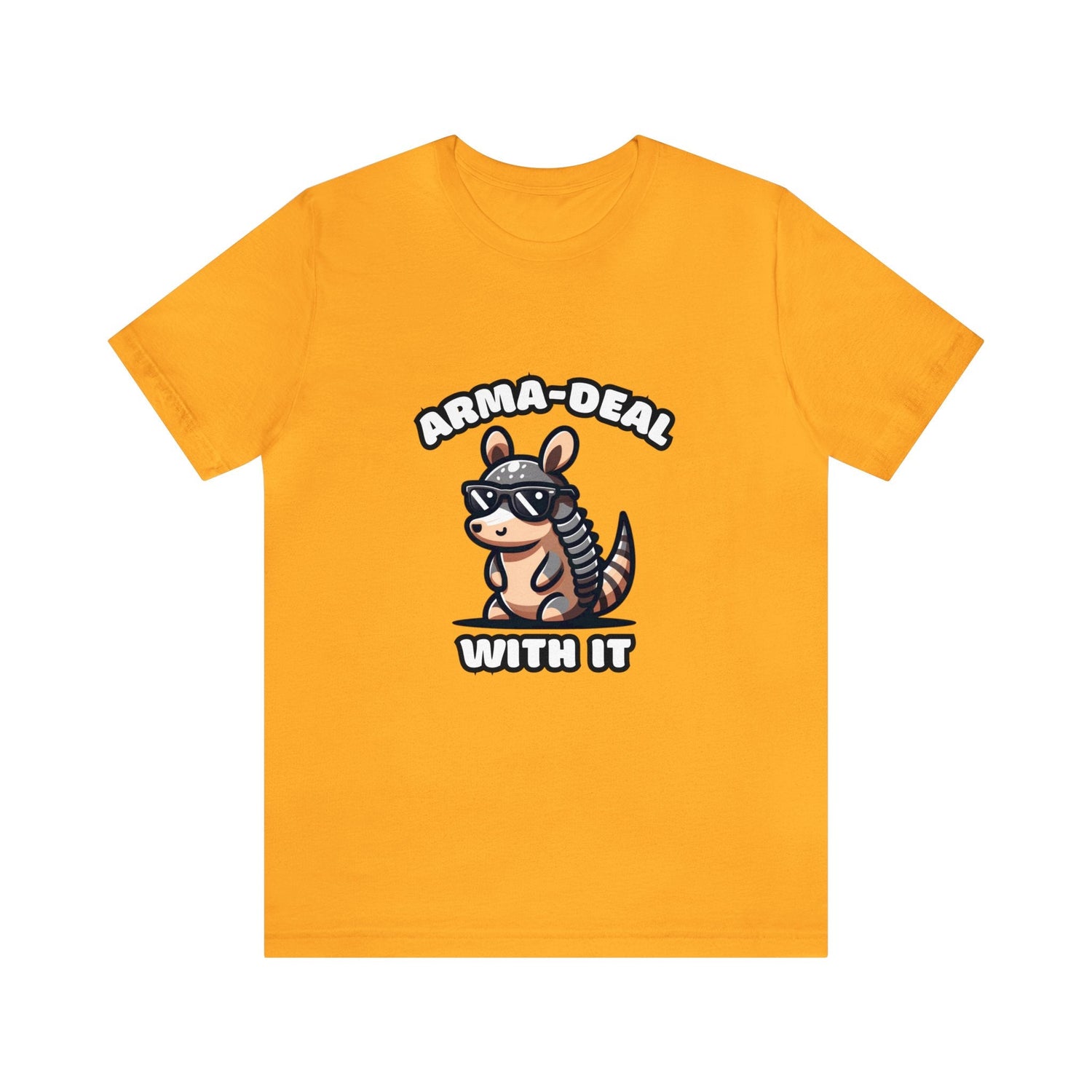
Wear the pun 🐾
Love play on words humor? Our play on words tees put the pun on your chest — new designs drop weekly.
FAQ: Play On Words Puns
What exactly is a play on words pun?
A play on words pun is a joke or phrase that exploits multiple meanings of a word or words that sound similar. It relies on the audience recognizing the double meaning or clever twist in language. These puns are the foundation of wordplay humor and range from subtle to spectacularly groan-worthy.
Why are play on words puns considered the highest form of humor?
Play on words puns require your brain to simultaneously understand two different meanings—which makes them intellectually satisfying and entertaining. They reward people who love language, and they're short enough to deliver a quick laugh. Plus, the collective eye-roll from your audience proves the pun landed perfectly.
Can I use these puns in professional settings?
Absolutely! The puns in this collection are family-friendly and work-appropriate, making them perfect for emails, presentations, and casual conversations. Just read your audience—some settings (like creative industries) celebrate wordplay more openly, while others might appreciate a lighter touch. A well-timed pun can break the ice in any room.
How do I come up with my own play on words puns?
Start by thinking of words with multiple meanings or words that sound alike (homophones). Ask yourself 'what else could this mean?' and explore unexpected connections. The best puns feel inevitable once you hear them, so don't be afraid to brainstorm wild combinations. Practice is key—the more you play with language, the more naturally puns will flow.